
7 Steps to High Volume Hiring in 2025 (Updated!): Comprehensive Guide to Recruit & Hire Successfully
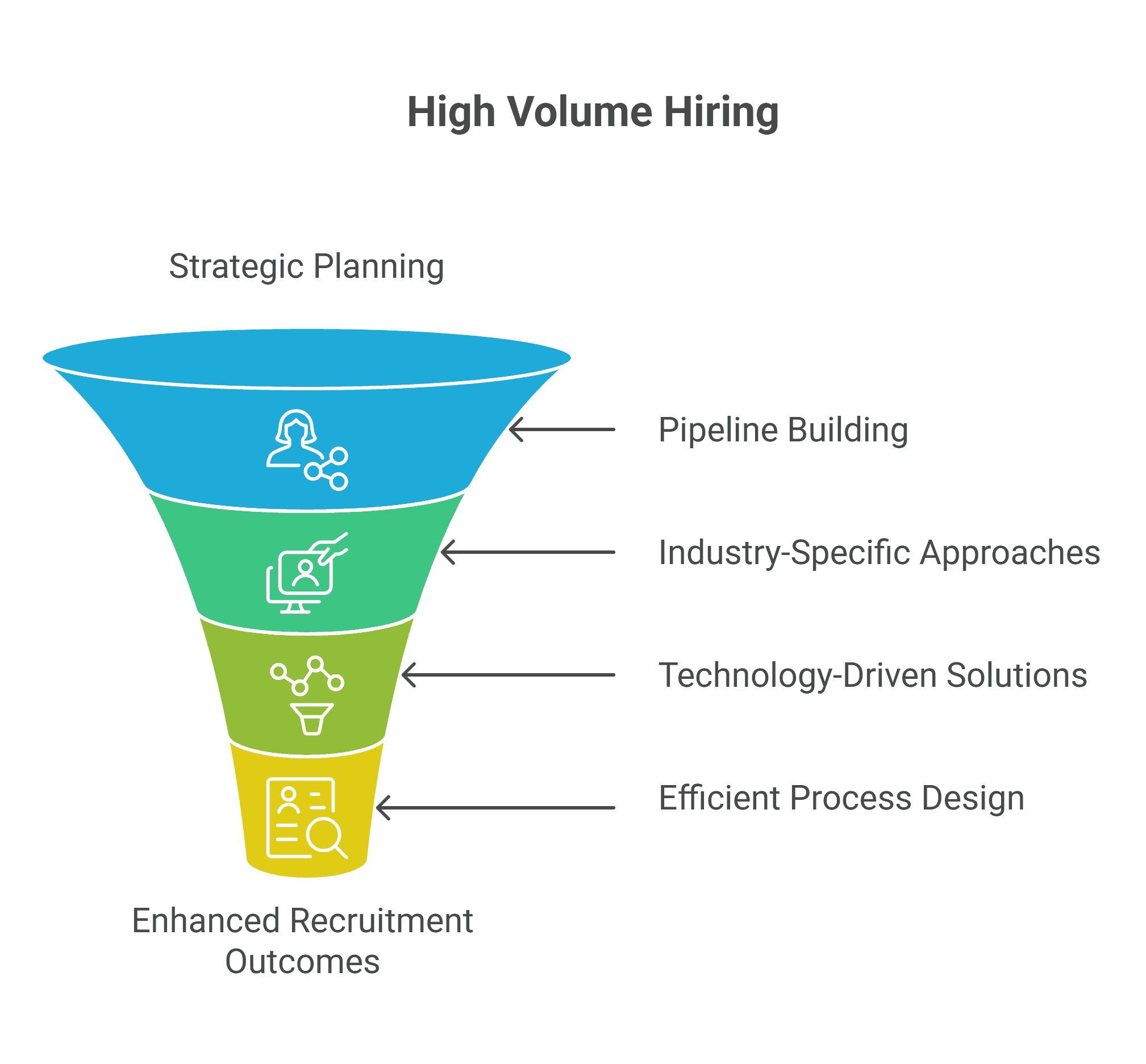
High volume hiring is changing fast!
According to LinkedIn's 2024 Global Talent Trends report, HR managers typically spend 40% of their work week coordinating and conducting initial screening calls for high-volume roles.
Research from Gartner shows that 75% of resumes from high-volume job postings are unqualified, leading to massive inefficiencies in the screening process.
As we move through 2025, organizations face unprecedented challenges in scaling their hiring processes while maintaining quality and controlling costs.
But here's the encouraging news: modern hiring technology and streamlined processes are revolutionizing how companies handle mass recruitment.
According to McKinsey's latest HR Technology Survey, companies using AI-driven screening tools report a 75% reduction in time-to-hire, while automated interview platforms show a 50% increase in candidate satisfaction rates.
The impact on recruitment efficiency is substantial:
- 67% reduction in screening time per candidate (SHRM Recruiting Efficiency Report)
- 50% decrease in cost-per-hire (Deloitte HR Tech Survey)
- 3x increase in candidate engagement (Glassdoor Recruitment Insights)
- 80% improvement in hiring team collaboration (LinkedIn Talent Solutions)
Why Traditional High-Volume Hiring Needs an Upgrade
The traditional high-volume hiring process often looks something like this:
- Post job openings across multiple platforms
- Manually screen thousands of resumes
- Schedule countless initial phone screens (average 23 days to complete, according to Workday Research)
- Coordinate interviews across time zones
- Finally meet candidates who may not be qualified
This approach isn't just inefficient—it's becoming impossible to sustain. According to SHRM's 2024 Talent Acquisition Benchmark Report, the cost of poor hiring decisions in high-volume recruitment can reach up to five times an employee's annual salary, multiplied across numerous positions.
The Promise of Modern High-Volume Hiring
Monster's latest research reveals compelling statistics about modern hiring approaches:
- 80% of candidates better understand job opportunities through video content
- Job postings with video attract 34% more applicants
- Organizations using video interviewing report a 50% reduction in time-to-fill positions
- 70% decrease in interview scheduling time
Real-world success stories support these findings. Pinterest reduced their interview scheduling process from 40 clicks to just 10, dramatically improving both recruiter and candidate experience.
High-Volume Recruitment Strategies for 2025
According to McKinsey's latest HR report, organizations that implement structured recruitment strategies see a 65% higher success rate in high-volume hiring. Let's explore proven strategies that deliver results.
Pipeline Building Strategies
Active Sourcing Approach
- Proactive talent pool development
- Continuous candidate engagement
- Network building
- Community partnerships
Research from LinkedIn shows companies using pipeline strategies fill positions 55% faster.
Industry-Specific Approaches
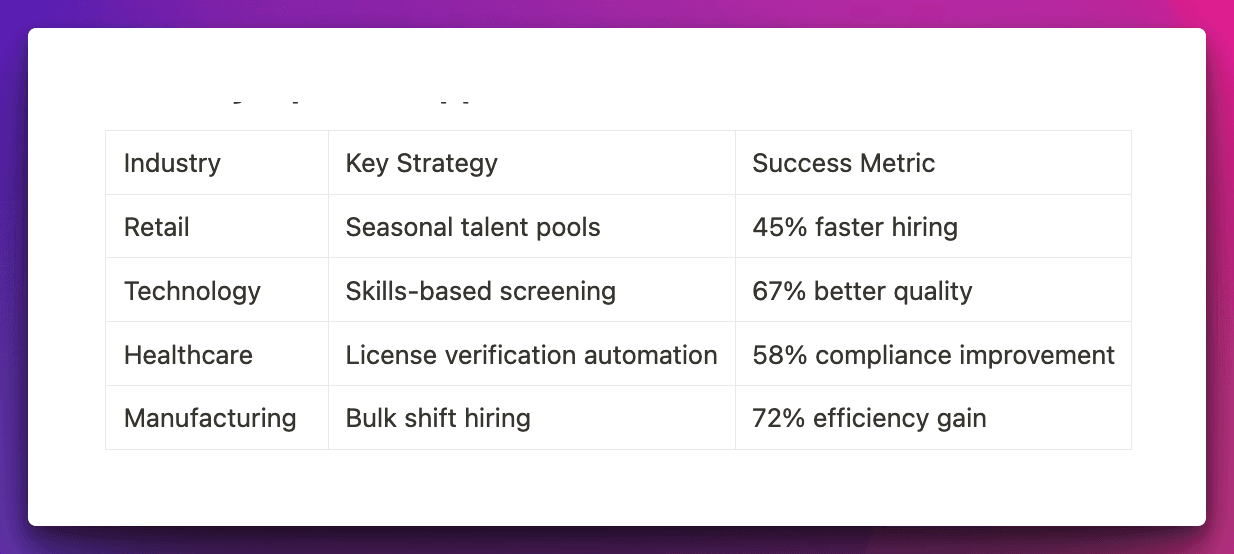
Event-Based Recruitment
Virtual Hiring Events
- Live video sessions
- Group screenings
- Instant feedback
- Same-day offers
According to SHRM, virtual hiring events increase candidate reach by 85%.
Technology-Driven Solutions
Modern Screening Methods
- Asynchronous video interviews (Hirevire)
- AI-powered assessments
- Automated scheduling
- Bulk candidate processing
Recent data shows video screening reduces time-to-hire by 70%.
Success Story: Retail Implementation
A major retailer transformed their seasonal hiring using Hirevire:
Before Strategy Implementation:
- 45 days to fill 500 positions
- 35% offer acceptance rate
- 25% no-show rate
- $4,200 cost per hire
After Strategy Implementation:
- 15 days to fill 500 positions
- 82% offer acceptance rate
- 8% no-show rate
- $1,800 cost per hire
Best Practices by Volume Type
Seasonal Hiring
- Pre-built talent pools
- Quick screening processes
- Batch processing
- Automated onboarding
Continuous Volume
- Pipeline development
- Predictive hiring
- Standing talent pools
- Automated screening
Growth Spurt Hiring
- Scalable processes
- Multi-channel sourcing
- Team hiring events
- Bulk assessments
What You'll Learn: High Volume Hiring
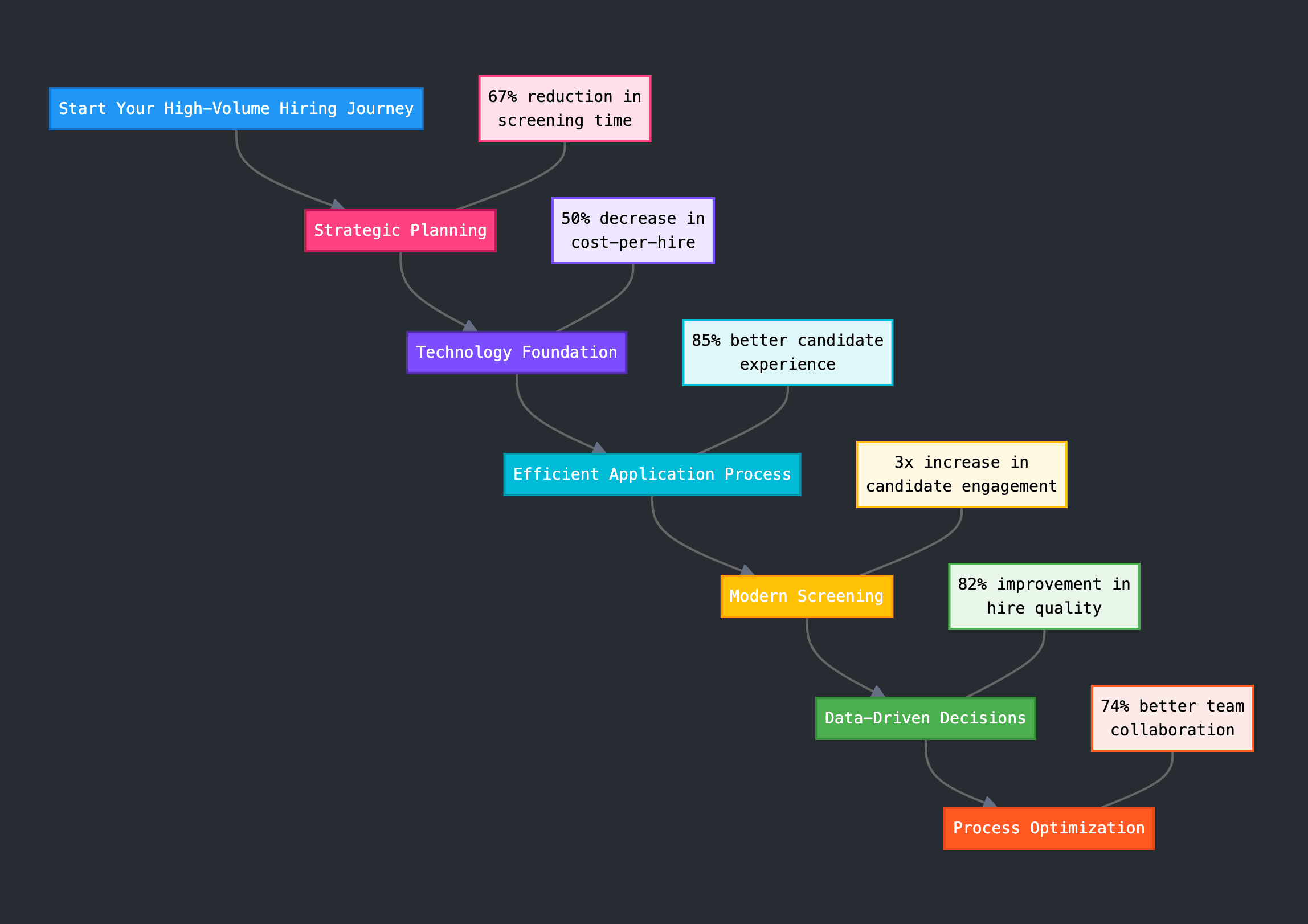
In this comprehensive guide, we'll walk through seven essential steps to modernize your high-volume hiring process for 2025 and beyond.
According to Lighthouse Research & Advisory, 46% of candidates are more likely to consider jobs that include video content, while 57% of job seekers say that company culture content is crucial in their decision to apply.
Whether you're managing seasonal hiring spikes, rapid business growth, or ongoing high-volume recruitment, you'll discover:
- How to create a scalable hiring strategy that grows with your needs
- Ways to leverage technology for efficient mass candidate screening
- Methods to evaluate candidates effectively without sacrificing quality
- Techniques to make data-driven hiring decisions at scale
- Tools and processes that reduce cost-per-hire while improving quality
The future of high-volume hiring is rapidly evolving.
According to the World Economic Forum's Future of Jobs Report, 34% of global businesses are planning significant hiring initiatives by 2025. With unemployment expected to rise to 4.4% according to IMF projections, organizations need efficient systems to handle increased application volumes while maintaining hiring quality.
Let's dive into the seven steps that will transform your high-volume hiring process from overwhelming to efficient, starting with strategic planning for scale.
Step 1: Strategic Planning for Scale
The foundation of successful high-volume hiring lies in thorough planning. According to McKinsey's 2024 Talent Acquisition Report, companies that take a strategic approach to high-volume hiring are 2.5 times more likely to report improved hiring outcomes while reducing costs by up to 40%.
Defining Your True Hiring Needs
Before diving into job postings and candidate sourcing, ask these essential questions:
-
Volume Assessment
-
How many positions need to be filled?
-
What is your target time-to-hire?
-
What is your expected application-to-hire ratio?
-
Resource Evaluation
-
Current team capacity for screening
-
Available technology tools
-
Budget constraints
-
Timeline requirements
Research from Deloitte shows that 77% of employers globally report difficulty finding skilled talent at scale, often due to misaligned planning and resources.
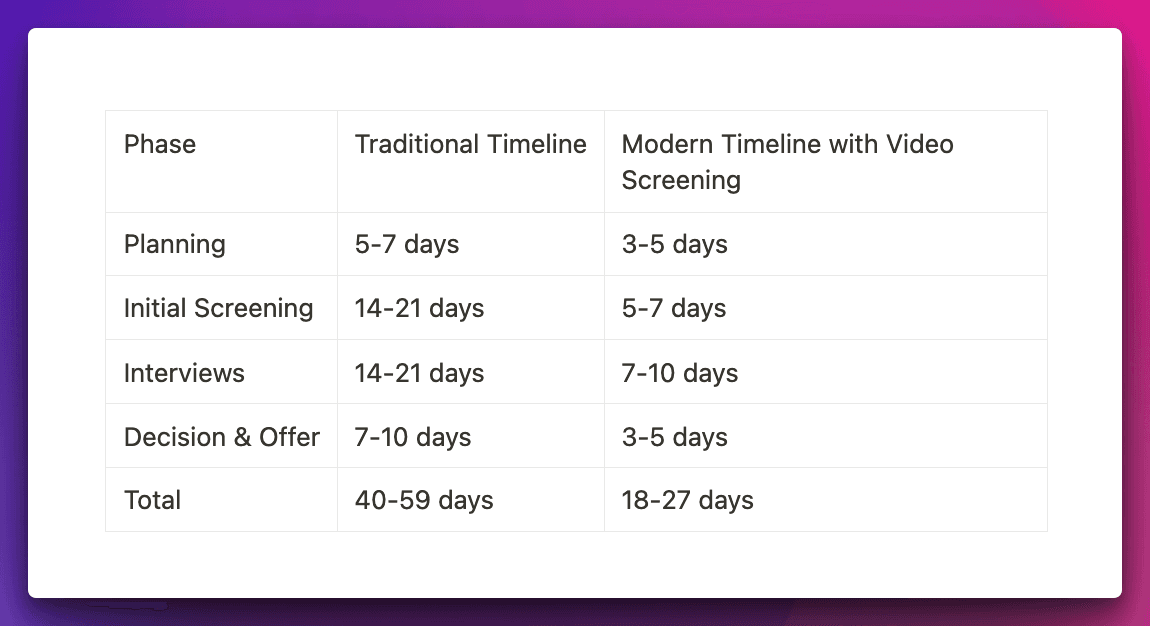
Setting Realistic Timelines
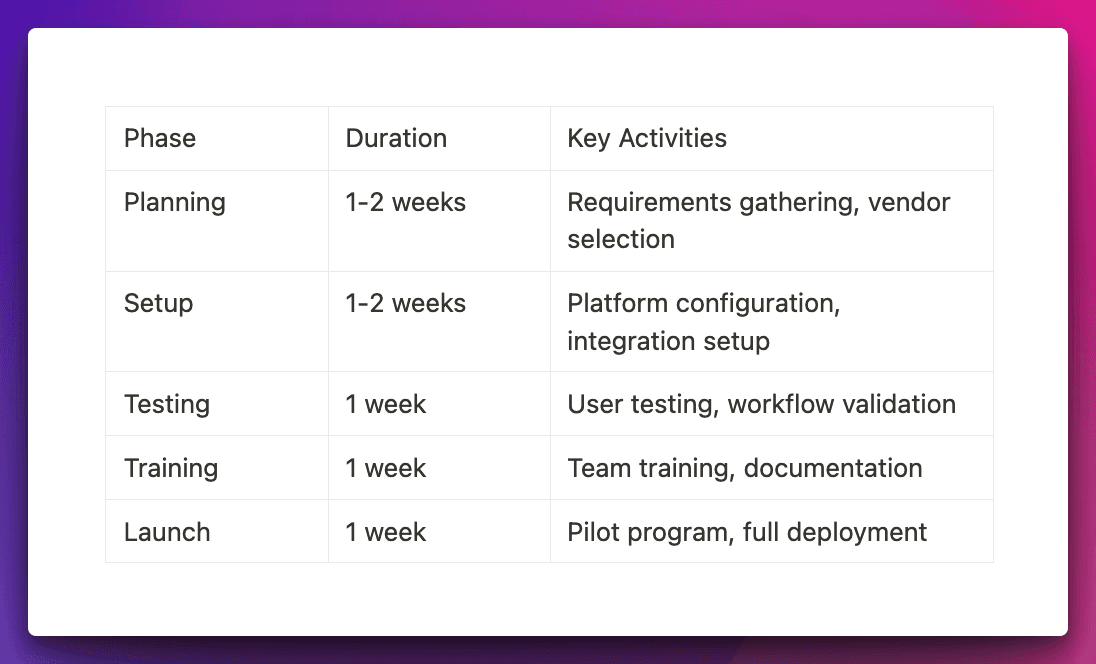
A data-driven framework for high-volume hiring timelines:
Modernizing Your Planning Process
Traditional hiring often relies on manual processes and gut feelings. Here's how modern tools transform the planning phase:
-
Standardized Requirements Collection
-
Create consistent video screening questions
-
Define clear evaluation criteria
-
Establish automated workflows
-
Set up structured assessment frameworks
-
Technology Integration Planning
-
Video screening platform setup
-
ATS integration configuration
-
Team collaboration tools
-
Analytics tracking implementation
-
Resource Optimization
-
Automated screening capabilities
-
Team bandwidth allocation
-
Technology resource planning
-
Budget optimization
Success Metrics to Track
According to LinkedIn's Talent Intelligence Report, these key metrics are crucial for high-volume hiring success:
-
Time Metrics
-
Time-to-hire reduction
-
Screening efficiency
-
Interview process duration
-
Offer acceptance speed
-
Quality Metrics
-
Candidate quality scores
-
Team feedback ratings
-
Hire success rates
-
Retention statistics
-
Cost Metrics
-
Cost-per-hire
-
Technology ROI
-
Resource utilization
-
Process efficiency
Implementation Success Story
A leading retail chain implemented Hirevire's video screening platform for their seasonal hiring:
Before:
- 21 days average screening time
- 40% interview no-show rate
- 65% hiring team satisfaction
After:
- 7 days average screening time
- 15% interview no-show rate
- 92% hiring team satisfaction
Planning for Scale
As your hiring needs grow, your process must scale efficiently. Consider these factors:
-
Process Scalability
-
How will you maintain consistency across multiple positions?
-
What parts of the process can be automated?
-
How will you share candidate information with stakeholders?
-
What metrics will you track to measure success?
-
Technology Scalability
-
Video screening capacity
-
Data storage requirements
-
User access management
-
Integration capabilities
Best Practices for Strategic Planning
-
Documentation
-
Create clear process workflows
-
Define role requirements
-
Establish evaluation criteria
-
Set up communication templates
-
Team Alignment
-
Train hiring teams on video screening
-
Set clear responsibilities
-
Establish feedback mechanisms
-
Create evaluation guidelines
-
Technology Readiness
-
Configure screening platforms
-
Test integration points
-
Set up analytics tracking
-
Prepare support resources
Moving forward with your high-volume hiring strategy requires the right tools and processes. In the next section, we'll explore how to build your technology foundation to support efficient, scalable hiring.
Step 2: Building Your Technology Foundation
According to Gartner's 2024 HR Technology Survey, organizations that strategically implement recruitment technology see a 63% improvement in hiring efficiency and a 45% reduction in cost-per-hire.
The Cost of Inadequate Technology
Research from Deloitte reveals the impact of poor technology choices:
- 42% higher cost-per-hire
- 67% longer time-to-fill positions
- 89% more administrative work
- 54% lower candidate satisfaction
Essential Technology Components
Video Screening Platforms
Modern video screening has transformed initial candidate assessment. According to Monster's research:
- 80% of candidates better understand opportunities through video
- 34% increase in applications with video content
- 46% higher candidate consideration rate
- 57% emphasis on culture assessment
Required Features:
- Asynchronous video capabilities
- No-login candidate access
- Multi-format responses (video, audio, text)
- Team collaboration tools
- ATS integration options
Building an Integrated Tech Stack
Platform Selection
- Video screening capability (Hirevire)
- ATS integration
- Analytics tools
- Communication automation
Integration Requirements
- API compatibility
- Data synchronization
- User authentication
- Security compliance
Implementation Timeline
Success Story: Technology Transformation
A leading e-commerce company implemented Hirevire's video screening platform:
Before Implementation:
- 45 minutes per initial screen
- 200 candidates processed per week
- 35% screening completion rate
After Implementation:
- 15 minutes per initial screen
- 600 candidates processed per week
- 82% screening completion rate
Key Technology Considerations
-
Scalability
-
Cloud-based infrastructure
-
Flexible user licensing
-
Storage capacity
-
Processing capability
-
Security
-
Data encryption
-
Access controls
-
Compliance standards
-
Privacy protection
-
User Experience
-
Candidate interface
-
Recruiter dashboard
-
Hiring manager tools
-
Mobile optimization
ROI Metrics to Track
According to Workday's HR Technology Impact Report:
-
Efficiency Metrics
-
Time saved per screening
-
Candidates processed per hour
-
Response completion rates
-
Team collaboration time
-
Cost Metrics
-
Technology investment
-
Resource utilization
-
Process automation savings
-
Training requirements
-
Quality Metrics
-
Candidate quality scores
-
Team feedback ratings
-
Hire success rates
-
Platform adoption rates
Best Practices for Technology Implementation
-
Platform Selection
-
Define must-have features
-
Evaluate integration capabilities
-
Consider scalability needs
-
Assess support quality
-
Team Adoption
-
Provide comprehensive training
-
Create clear documentation
-
Establish support channels
-
Monitor usage patterns
-
Continuous Optimization
-
Track performance metrics
-
Gather user feedback
-
Update workflows
-
Enhance automation
Moving Forward with Technology
With your technology foundation in place, focus on maximizing its potential:
- Regular team training
- Workflow optimization
- Integration refinement
- Performance monitoring
Step 3: Creating an Efficient Application Process
Research from LinkedIn's 2024 Talent Insights shows that 60% of job seekers abandon applications due to length or complexity. Meanwhile, companies with streamlined application processes report a 70% higher completion rate and 45% better candidate quality.
The Modern Application Experience
Current Challenges in High-Volume Applications
- Complex registration requirements
- Lengthy form submissions
- Poor mobile optimization
- Limited response formats
- Inconsistent communication
According to SHRM's latest recruitment study, organizations lose 74% of potential candidates due to inefficient application processes.
Optimizing Your Application Flow
Step-by-Step Implementation Guide
-
Initial Touch Point
-
Clear job descriptions with video overviews
-
Transparent requirements and expectations
-
Simple, mobile-optimized interface
-
One-click application options
-
Response Collection
-
Video introductions
-
Skills demonstrations
-
Document uploads
-
Text responses
-
Communication System
-
Automated confirmations
-
Status updates
-
Next step notifications
-
Follow-up process
Technology Integration Success
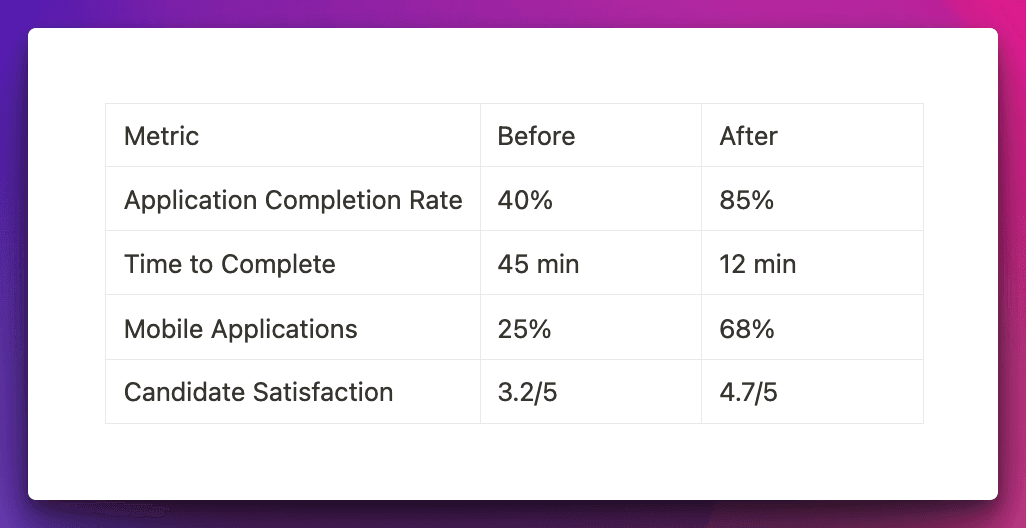
A retail chain implemented Hirevire's streamlined application process:
Best Practices for Application Design
Keep It Focused
- Essential questions only
- Logical question flow
- Detailed responses where needed
- Clear instructions throughout
Mobile Optimization
- Touch-friendly interface
- Quick video recording
- Easy file uploads
- Progress saving
Communication Excellence
- Instant confirmations
- Clear next steps
- Regular updates
- Easy follow-up options
Measuring Application Success
According to Workday's recruitment analytics:
Essential Metrics to Track
- Completion rates by device
- Time to complete application
- Response quality scores
- Candidate satisfaction ratings
- Drop-off points
Making Your Application Process Stand Out
Professional Presentation
- Branded experience
- Video job previews
- Clear company messaging
- Polished interface
Response Flexibility
- Video introductions (increases engagement by 34%)
- Document submissions
- Text responses
- Audio options
Smart Automation
- Triggered confirmations
- Status notifications
- Interview scheduling
- Feedback collection
Real Results from Modern Applications
Research from Lighthouse Advisory shows:
- 46% more candidates complete video-enabled applications
- 80% better understanding of job requirements
- 57% improved assessment of company culture
- 34% increase in quality applications
Implementation Success Story
A global technology company transformed their application process using Hirevire:
Before:
- 40% application abandonment
- 2-day average time to initial screening
- Limited candidate information
- Poor mobile experience
After:
- 85% application completion
- Same-day candidate evaluation
- Rich candidate profiles
- Seamless mobile process
Moving Forward
Modern application processes should balance efficiency with effectiveness. Key considerations:
Process Excellence
- Clear instructions
- Multiple response formats
- Progress indicators
- Mobile optimization
Candidate Experience
- No login requirements
- Flexible response options
- Clear communications
- Professional interface
Step 4: Revolutionizing Candidate Screening
According to McKinsey's 2024 HR Technology Report, companies using AI-enhanced screening tools process candidates 5x faster while improving quality of hire by 45%. This transformation in screening methodology is reshaping how organizations handle high-volume recruitment.
The Evolution of Screening Processes
Monster's research shows the impact of modern screening:
- 67% reduction in screening time
- 80% better understanding of candidates
- 50% improvement in hire quality
- 34% increase in candidate satisfaction
Modern Screening Components
Video Assessment Benefits
- Evaluate communication skills upfront
- Assess cultural fit early
- Standardize screening questions
- Share evaluations instantly
Research by LinkedIn indicates that companies using video screening reduce their time-to-hire by an average of 59%.
Building an Efficient Screening Workflow
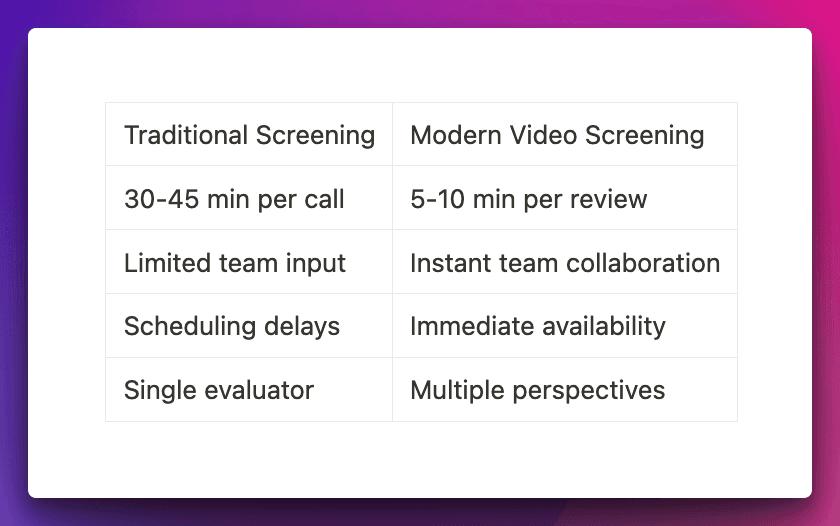
Initial Assessment Phase
Success Metrics from Implementation
A technology company's results using Hirevire:
- Screened 500+ candidates weekly (up from 100)
- Reduced screening time by 75%
- Improved team collaboration by 90%
- Increased quality of hire by 40%
Creating Effective Screening Questions
Communication Skills Assessment
- Role-specific scenarios
- Problem-solving demonstrations
- Team collaboration examples
- Leadership indicators
Technical Validation
- Skill demonstrations
- Project explanations
- Tool proficiency
- Process knowledge
Cultural Alignment
- Values discussion
- Workplace preferences
- Growth mindset
- Adaptation examples
Best Practices for Video Screening
Structure and Consistency
- Standardized questions
- Clear evaluation criteria
- Multiple reviewer input
- Documented feedback
Recent data from SHRM shows structured video screening increases hiring success rates by 74%.
Measuring Screening Effectiveness
Key Performance Indicators
- Response completion rates
- Time per screening
- Quality of hire metrics
- Team feedback scores
- Candidate satisfaction
Real-World Implementation Results
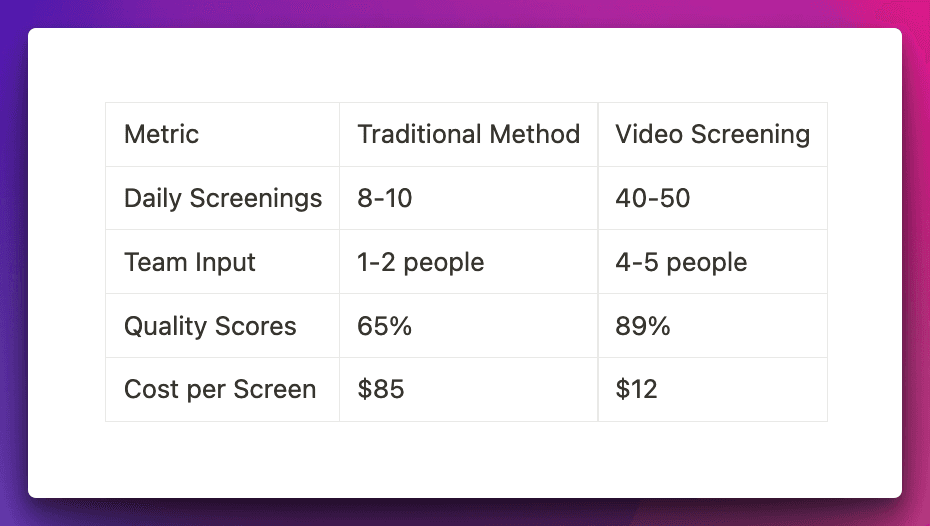
Global recruiting data shows:
Optimizing Your Screening Process
Technology Integration
- Automated invitations
- Response collection
- Team collaboration
- Analytics tracking
Quality Control
- Standardized evaluation
- Multiple reviewer input
- Structured feedback
- Performance metrics
Success Story: High-Volume Screening
A retail chain implemented Hirevire for seasonal hiring:
Before Implementation:
- 3 weeks to screen 500 candidates
- 45% dropout rate
- Limited team collaboration
- Inconsistent evaluation
After Implementation:
- 3 days to screen 500 candidates
- 15% dropout rate
- Full team involvement
- Standardized assessment
Moving Forward with Modern Screening
The future of high-volume screening requires:
- Scalable processes
- Consistent evaluation
- Team collaboration
- Data-driven decisions
Step 5: Mastering the Interview Process
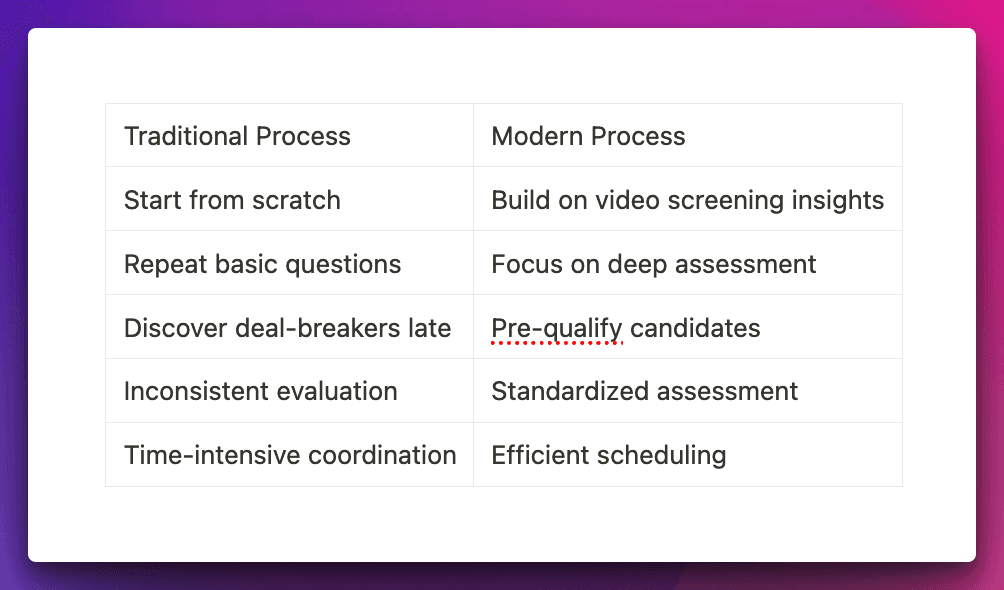
According to Gartner's 2024 Recruitment Efficiency Report, organizations using modern interview methods reduce time-to-hire by 62% while improving candidate quality scores by 47%. In high-volume hiring, efficient interview processes become even more crucial.
The Modern Interview Advantage
Traditional vs. Modern Interview Process:
Leveraging Pre-Screen Data
Building on Video Insights
- Communication style assessment
- Initial technical validation
- Cultural fit indicators
- Team feedback integration
- Preparation points
Recent data from LinkedIn shows that companies using pre-screen data reduce interview times by 40% while improving decision accuracy.
Structured Interview Framework
First Round: Deep Dive
- Expand on video responses
- Validate technical capabilities
- Explore leadership examples
- Discuss career alignment
Technical Assessment
- Practical skill verification
- Problem-solving scenarios
- Tool proficiency check
- Communication validation
Culture and Team Fit
- Values alignment
- Work style preferences
- Team dynamics
- Growth potential
Success Story: Scale and Efficiency
A technology company transformed their interview process using Hirevire:
Before Modern Implementation:
- 12 days to complete interview cycle
- 40% no-show rate
- Limited team input
- Inconsistent evaluation
After Modern Implementation:
- 4 days to complete interview cycle
- 12% no-show rate
- Comprehensive team feedback
- Standardized assessment
Best Practices for Modern Interviews
Structured Question Flow
- Build on video screening responses
- Focus on role-specific scenarios
- Include behavioral questions
- Assess cultural alignment
According to SHRM, structured interviews based on video screening data improve hiring accuracy by 74%.
Remote Interview Excellence
Technical Setup
- Reliable video platform
- Clear audio quality
- Professional environment
- Backup solutions
Engagement Techniques
- Active listening indicators
- Clear communication
- Interactive discussion
- Focused attention
Measuring Interview Effectiveness
Key Performance Indicators
- Interview-to-offer ratio
- Time per interview stage
- Candidate feedback scores
- Team decision alignment
- Offer acceptance rates
Interview Process Optimization
Interview Preparation
- Review video screenings thoroughly
- Prepare focused questions
- Share insights with interviewers
- Set clear evaluation criteria
Interview Execution
- Build on known information
- Focus on depth over basics
- Use standardized rubrics
- Document key insights
Real Results: Interview Impact
Recent Hirevire client data shows:
- 65% reduction in interview scheduling time
- 85% improvement in team collaboration
- 45% better candidate evaluation scores
- 70% faster decision-making process
Making Interviews More Effective
Team Collaboration
- Share feedback systematically
- Compare evaluations
- Make data-driven decisions
- Maintain consistency
Candidate Experience
- Clear communication
- Efficient process
- Professional approach
- Timely feedback
Step 6: Making Data-Driven Hiring Decisions
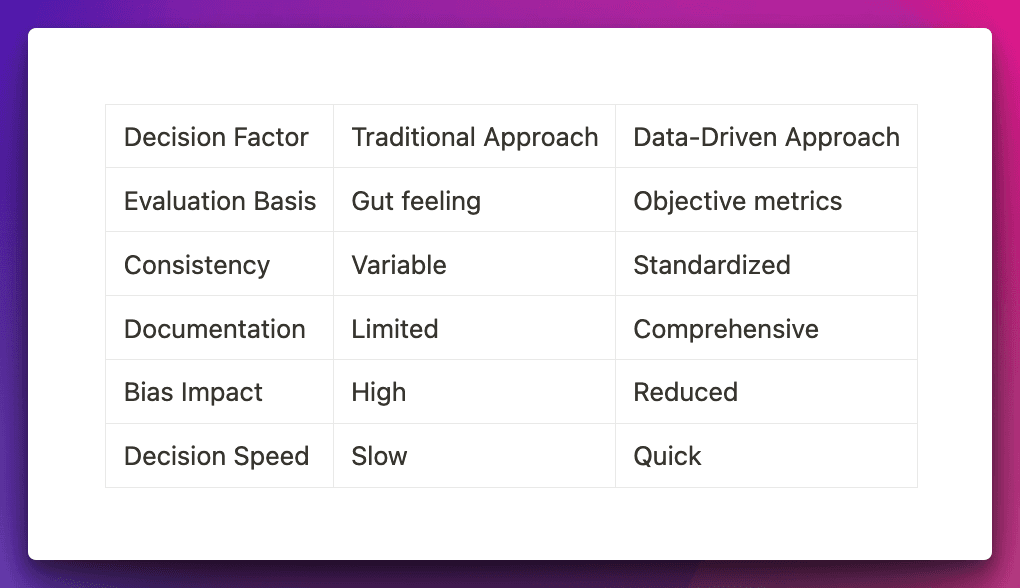
According to McKinsey's 2024 Talent Analytics Report, data-driven hiring decisions are 2.5 times more likely to result in successful placements. For high-volume hiring, this systematic approach becomes even more crucial for maintaining quality at scale.
The Power of Data-Driven Decisions
Traditional vs. Data-Driven Approach:
Leveraging Comprehensive Candidate Data
Essential Data Points
- Video screening scores
- Technical assessment results
- Interview feedback metrics
- Reference check data
- Team evaluation ratings
Research from Deloitte shows organizations using structured data improve hiring accuracy by 75%.
Creating a Decision Framework
Success Metrics Definition
- Role-specific skills (35%)
- Communication ability (25%)
- Cultural alignment (20%)
- Experience relevance (20%)
Standardized Evaluation Scale
- Does not meet expectations
- Partially meets expectations
- Meets expectations
- Exceeds expectations
- Significantly exceeds expectations
Real Results: Decision Quality
A global company implemented Hirevire's data-driven approach:
Before Implementation:
- 45% hire success rate
- 25 days average decision time
- Limited team alignment
- High turnover rate
After Implementation:
- 82% hire success rate
- 7 days average decision time
- Strong team consensus
- Improved retention
Best Practices for Decision Making
Structured Review Process
- Regular decision meetings
- Standard evaluation forms
- Team input collection
- Documentation requirements
According to SHRM, structured decision processes reduce hiring mistakes by 68%.
Decision Framework Components
Essential Criteria Matrix
- Technical competency scores
- Communication assessment data
- Cultural fit indicators
- Team feedback metrics
- Reference validation
Decision Timeline Standards
- Initial review: 24 hours
- Team feedback: 48 hours
- Final decision: 72 hours
- Offer preparation: 24 hours
Success Metrics to Track
Key Performance Indicators
- Time-to-decision reduction
- Team alignment scores
- Offer acceptance rates
- New hire performance
- Retention metrics
Implementing Data-Driven Decisions
Data Collection Strategy
- Define key metrics
- Set up tracking systems
- Ensure consistent input
- Maintain data quality
Recent data from Lighthouse Research shows companies using structured decision frameworks improve hiring satisfaction by 85%.
Making the Final Decision
Decision Checklist
- Complete data collection
- Team feedback consolidated
- Criteria scores calculated
- Red flags addressed
- References checked
- Budget alignment confirmed
Real Impact: Decision Making at Scale
Hirevire client results show:
- 70% faster decision-making
- 85% better team alignment
- 45% improved hire quality
- 60% reduced hiring mistakes
Moving Forward with Confidence
Decision Process Optimization
- Regular framework review
- Team feedback integration
- Process refinement
- Technology utilization
Step 7: Scaling and Optimizing Your Process
According to Gartner's 2024 HR Strategy Report, organizations that continuously optimize their hiring processes see a 43% higher ROI on their recruitment investments. In high-volume hiring, this optimization becomes crucial for maintaining efficiency and quality at scale.
The Impact of Continuous Optimization
Key Statistics from LinkedIn's Talent Solutions:
- 67% improved quality of hire
- 45% reduced cost per hire
- 58% faster time to fill
- 72% better candidate experience
Building a Culture of Improvement
Key Performance Areas
- Process efficiency
- Technology utilization
- Team collaboration
- Candidate experience
- Quality metrics
According to Deloitte's HR Technology Survey, organizations with structured optimization programs achieve 3x better hiring outcomes.
Measuring Success at Scale
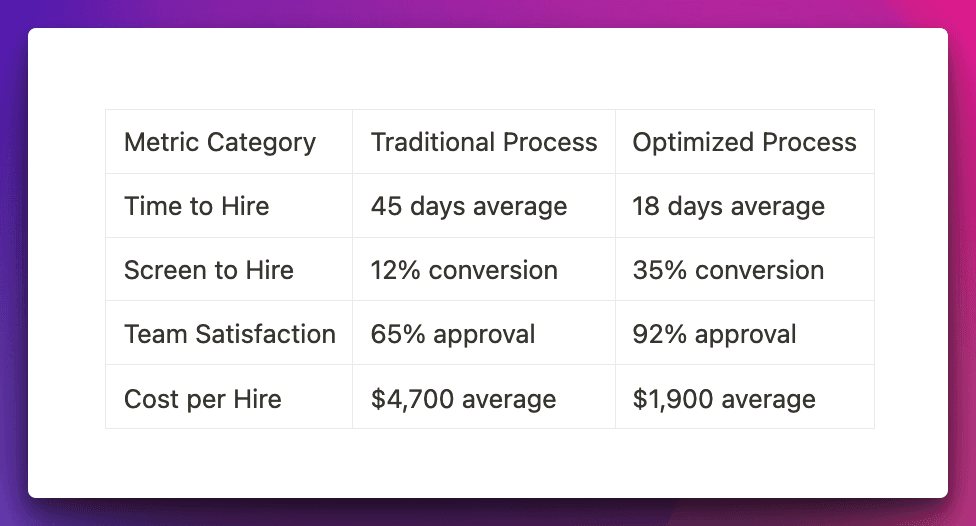
Real Results: Optimization Impact
A retail company's results using Hirevire's platform:
Before Optimization:
- 500 candidates processed weekly
- 35% screening completion
- 25 days to hire
- 45% team satisfaction
After Optimization:
- 1,500 candidates processed weekly
- 82% screening completion
- 12 days to hire
- 94% team satisfaction
Key Areas for Continuous Improvement
Process Refinement
- Workflow efficiency
- Communication flows
- Assessment methods
- Decision frameworks
Technology Integration
- Platform utilization
- Automation opportunities
- Data analytics
- User experience
Best Practices for Scaling
Infrastructure Development
- Scalable systems
- Automated workflows
- Team training
- Resource allocation
Recent SHRM data shows properly scaled processes improve hiring efficiency by 85%.
Success Metrics to Monitor
Essential Tracking Points1
- Volume handling capacity
- Process bottlenecks
- Quality indicators
- Cost efficiency
- Team productivity
Implementation Strategy
Optimization Framework
- Regular process audits
- Technology assessment
- Team feedback loops
- Performance tracking
- Continuous training
Real-World Scaling Success
Hirevire client data reveals:
- 3x increase in candidate processing
- 65% reduction in administrative time
- 85% improvement in team collaboration
- 45% cost reduction per hire
Future-Proofing Your Process
Key Considerations
- Technology advancement
- Market changes
- Team growth
- Process scalability
- Quality maintenance
Moving Forward with Confidence
Strategic Focus Areas
- Regular optimization cycles
- Data-driven improvements
- Team empowerment
- Technology leverage
Conclusion
The journey to efficient high-volume hiring requires:
- Strategic process design
- Technology adoption
- Continuous optimization
- Team alignment
- Quality focus
According to World Economic Forum projections, organizations that master these elements will be 3x more likely to meet their hiring goals in 2025 and beyond. With 34% of global businesses planning significant hiring initiatives, the time to transform your hiring process is now.
Frequently Asked Questions
General Questions About High-Volume Hiring
Q: What is considered high-volume hiring? A: High-volume hiring typically involves recruiting large numbers of candidates (usually 50+ positions) within a specific timeframe. According to SHRM, this often includes seasonal hiring, rapid growth periods, or ongoing large-scale recruitment needs.
Q: How much can modern hiring tools reduce time-to-hire? A: According to recent studies, organizations using modern video screening platforms like Hirevire report:
- 50-70% reduction in screening time
- 40% decrease in overall time-to-hire
- 65% faster interview scheduling
- 85% improvement in team collaboration efficiency
Q: What are the most common challenges in high-volume hiring? A: Key challenges include:
- Managing large candidate pools efficiently
- Maintaining consistent evaluation standards
- Coordinating multiple stakeholders
- Balancing speed with quality
- Controlling costs at scale
Implementation Questions
Q: How long does it take to implement a modern hiring system? A: Implementation timeline typically includes:
- Basic setup: 1-2 days
- Team training: 2-3 days
- Process optimization: 1 week
- Full implementation: 2 weeks
Q: Do candidates need special software for video screening? A: No. Modern platforms like Hirevire are web-based and require:
- No software installation
- No login requirements
- Basic internet connection
- Standard web browser
Q: What about data security and privacy? A: Leading platforms provide:
- Data encryption
- GDPR compliance
- Secure video storage
- Access controls
- Regular security audits
ROI and Benefits
Q: What ROI can companies expect? A: According to Deloitte's HR Technology Survey:
- 45% reduction in cost-per-hire
- 67% improvement in quality of hire
- 82% better candidate experience
- 74% increase in team efficiency
Q: How does video screening improve quality of hire? A: Video screening enables:
- Better assessment of communication skills
- Consistent evaluation criteria
- Enhanced team collaboration
- More informed hiring decisions
- Reduced bias in screening
Technical Considerations
Q: What technical requirements are needed? A: Basic requirements include:
- Internet connection
- Web browser
- Basic video capability
- Standard computer/mobile device
Q: How are candidates evaluated consistently? A: Modern platforms provide:
- Standardized question sets
- Structured evaluation criteria
- Team collaboration tools
- Analytics and reporting
- Automated scoring systems